
Published
Chapter 2: Recharging and Road Mapping
Dice now decide the risky things you say, plus a look back, a short break, and the road ahead
Dice now decide the risky things you say. In Bellstone and The Dead Pay Half, a threat, a lie or a rousing word typed into a conversation is rolled against your hero's own attributes, with the same odds as the world's own checks.
It is also a good moment to stop and look back at how far Fable Forge has come, to tell you about the short break we are about to take, and to show you where we are heading next.
The Short Version
- Rolls for what you type - live now in Bellstone and The Dead Pay Half. Say something risky in a conversation and real dice decide how it lands.
- A run of smaller fixes - a "How this world works" window, conversation lines that always sit under the right speaker, locked buttons that say why, and plainer words in The Ruins Still Obey.
- Where we are - more than ten worlds, more than seven hundred places, more than five hundred characters and more than thirty-five thousand pieces of lore.
- A short break - we are a small team, and we are taking a few weeks to recharge. Updates will be light until we are back in full.
- Where we are heading - more fun, more varied and better-built content, and everything we learn from it going into how we make worlds with AI help.
Dice for What You Type
Until now, the dice came out when you chose an action from the world's own list. Typing was free-form: the story decided how your words landed. Now, when you type something risky in a conversation - a threat, a lie, a call to stand with you, a hard bargain - the game reads what you are trying, rolls real dice against your hero's own attributes, and the story tells you how it went. The odds are the same as the world's own checks, so typing a move is not an easier road than choosing it.
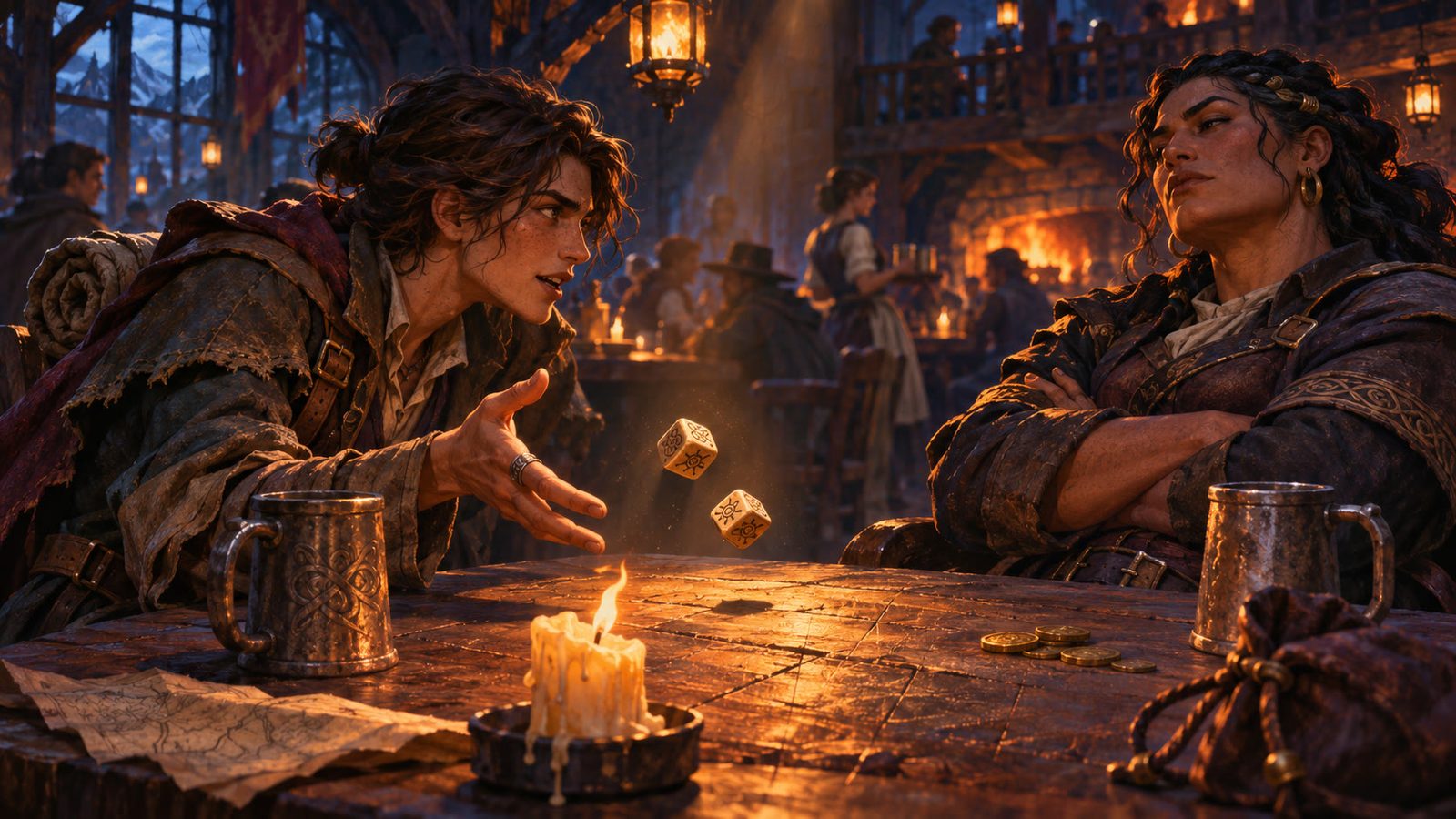
Words still have limits. Typing that you pick a lock or slip through a door does not open it: places keep their own actions. And your words cannot make someone else do something, or bring someone along, unless the world's own rules allow it.
It is switched on in Bellstone and The Dead Pay Half, and on by default. If you would rather the story decide, turn it off on the start card or in the game's settings. It is built so other worlds can switch it on too.
Smaller Changes and Fixes
- How a world works - learned by playing → a "How this world works" window in the game menu, and a short card after a Quick Start's first turn
- Group conversations - a line could appear under the wrong name while it was being written → every line sits under the person who said it
- Locked buttons - greyed out with no reason → they say why
- Asking someone to come along - they could agree without the game ever bringing them → they only agree when joining can actually happen
- Quest steps on objects - visible before the quest was given → they appear once you have the quest
- Resting - no word on what came back, and a pointless rest still cost you → it says how much you recovered, and a rest that would do nothing is turned down for free
- The Ruins Still Obey - the results of what you do still used the old wording → they read plainly, like every other world
- Liking a world - the prompt kept coming back → it stays away once you have liked it
- Telling us how a game went - a form, then nothing → a thank you, and an invitation to join us on Discord
- The home page - a still picture → a gameplay trailer you can play right there
- For developers of AI games - a second write-up, on testing a game with AI players who have never seen it: Blind AI Players
Where We Started
At the start of this year, Fable Forge was a character creator that could be anything and a way for one world to open in many places. In February, New in Newfield became our first experience. In April we could finally say it: Fable Forge was playable.
The summer was about getting real players into real worlds. Chapter 1.5 went live, Bellstone opened its doors, and we moved to releasing something new nearly every week: party members, a public roadmap, new worlds, real dice, faces that change with how people feel about you. In October, Chapter 2 brought combat, a map for almost every world, and one Ember for every action. This month, the people in our worlds learned to come over, remember you, and know how they know you.
More Than Ten Worlds

Today you can play more than ten worlds in your desktop or laptop web browser. A frontier town paying bounties, a theatrical city that sells the chance to be noticed, a freight sector that needs flying, an academy above and below, ruins that still obey, and more.
Together they hold more than seven hundred places, more than five hundred characters, more than six hundred quests, nearly three thousand items, more than two thousand things to examine and use, and more than thirty-five thousand pieces of lore: histories, secrets, and the everyday things people know about each other and the streets they live on. All of it made by our team with AI help, then tested.
What the Worlds Can Do
The worlds are only half of it. Underneath them sits an AI RPG engine that keeps the rules. Quests with steps you can follow in plain words. Combat, in turn-based fights and brawls, settled by real dice, with injuries that carry forward. Immersive Mode, paced beat by beat, or Novel Mode, read as a page of prose. People who track how you have treated them along several lines at once, and change their faces to match. A map that fills in as you explore. Companions who follow, wait or part ways. Possession, transformation, flight, and bodies with sockets for something new. Voices for the narration, and a soundscape for every place.
Each world switches on the systems that suit it, and every new system is built so the next world can use it too.
A Short Break
Fable Forge is made by a small team, and we have spent this year at the anvil. We believe our best creative energy comes from stepping away now and then: recharging, and playing what the rest of the games industry has to offer. So we have chosen this moment for a short break. Expect updates to be light for the next few weeks, before we jump back in full.
We will not pretend the timing is a coincidence. A certain very large, very long-awaited open-world game lands this week, and some of us have cleared our calendars for it. Purely for research, of course. If you see a dwarf behind the wheel, no, you didn't.
The Road Ahead
The first part of the plan was the foundation: a character creator that could be anything, worlds that could open in many places, and an engine that keeps the rules. The second was our first systems, with combat the biggest of them.
Alongside both, we built a hybrid way of making worlds. Our team sets the direction and plants the seeds for each world: its premise, its people, its tone. AI writes inside rules and systems we have curated and automated, and every world is tested before it opens. That is how we made more than ten worlds in a single year.
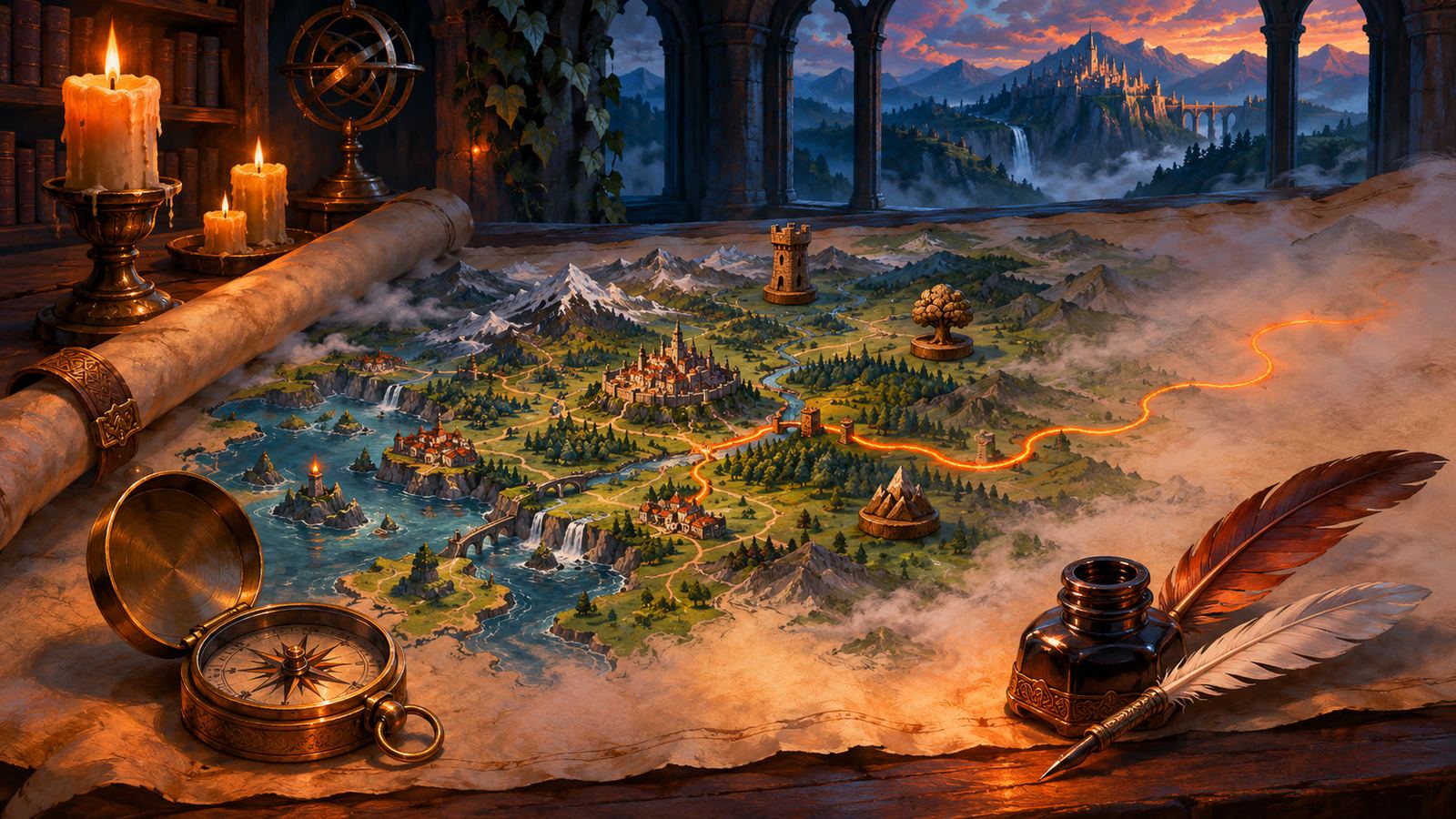
The next stage is about the content itself. We want worlds that are more fun and more surprising, more varied, and better built from the first scene to the last. And everything we learn from making them goes back into how we make worlds with AI help.
We are experimenting with AI-made content for a number of reasons, and one matters most. We think AI RPG worlds can be far bigger than anything a team could write by hand: truly massive, dynamic, and shaped around you. Our Systems page already lists one step toward that as in development: a crafted world that grows new places, people and quests wherever you go. A world economy, a clock and calendar, and characters with their own routines sit on the roadmap beside it.
Back to the Anvil
Not yet. First, a little time away from it.
Thank you for playing, for telling us what you find, and for sticking with us through a very big year. We will be back in full soon, rested and full of ideas.
More soon - after a short drive.